




Improving the system of enhancing education quality, teacher training, and professional development
In recent years, Uzbekistan’s education system has been renewing and improving in line with the demands of the modern world. A significant factor in this process has been the considerable increase in funding allocated to the sector.
Indeed, over the past seven years, funding for education has risen substantially. As a result, one million new places in schools and 1.5 million new places in preschools have been created. Consequently, preschool enrollment has tripled, reaching 78 percent. This, undoubtedly, marks a significant stage in infrastructural reforms.
However, focusing solely on infrastructure is not enough to improve the effectiveness of the education system. The qualifications and quality of teachers, as well as the efficiency of the learning process, are also of crucial importance.
At the recent video conference chaired by the President, special attention was given to the existing problems in the sector, and priority tasks were set for improving the system of teacher training and professional development.
Changes in the education system, in particular, the introduction of new programs adapted to the experience of advanced countries, along with modern textbooks and equipment, also raise questions about the qualifications of teachers and their ability to master new methodologies. In other words, modernization of the education system depends not only on material resources but also on the professional growth of teachers and their adoption of new educational technologies.
In this process, the transition of the teacher certification system to a transparent, digital platform two years ago revealed the real situation. Last year, 341,000 teachers applied for certification under the new system, but 102,000 of them failed the exam. To address this issue, an “Intensive 90 Days” program will be introduced to accelerate reforms in the education system. The system of improving education quality, teacher training, and professional development will be further enhanced.
The Head of State emphasized that to ensure quality in education, the system of teacher training and professional development must first be ready for this task. Based on this, it was decided to transform the Avloni Institute for Advanced Training and reorganize its 13 regional centers.
Today, the changes taking place in the education system, new programs, modern textbooks, and technologies require teachers to possess advanced qualifications and updated knowledge. The transformation of the Avloni Institute of Advanced Training will make it possible to organize professional development efforts for teachers on a regional scale. This will allow teachers to study in their own regions, saving them both time and financial resources.
Another noteworthy aspect is that the Avloni Institute of Advanced Training’s model will now be extended to regional training centers. This involves not only the construction of buildings and improvement of surrounding areas but also the unification of the environment, material and technical resources, qualified staff, knowledge, and experience at these centers.
This year, at least five teachers from pedagogical universities and advanced training centers, as well as the same number from each district, will be sent abroad. This will allow them to become acquainted with the best practices of the world’s education system and to study new pedagogical approaches, methodologies, and technologies. In turn, this will help to increase the effectiveness of reforms in the education system.
From this perspective, we, as deputies, must be more active and proactive in monitoring the effective implementation of the set goals and objectives and in ensuring the results of the reforms in the education system. After all, quality education is the foundation of the future.
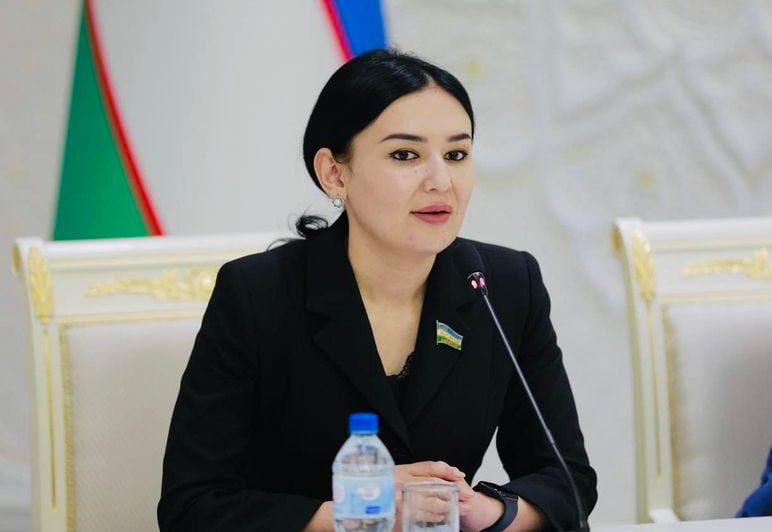
Shahnoza KHOLMAKHAMATOVA,
Deputy of the Legislative Chamber of the Oliy Majlis