




A new stage of broad cooperation
The state visit of the President of the Republic of Uzbekistan, Shavkat Mirziyoyev, to Mongolia on June 20, 2025, at the invitation of President Ukhnaagiin Khurelsukh, was not merely a diplomatic step. It was a vivid demonstration of the political maturity and strategic vision of the two leaders, showing their firm determination to establish full-fledged, comprehensive cooperation and signaling a new stage in bilateral relations.
For the first time in the history of diplomatic relations established in 1992, special attention and sincerity were devoted to preparing for our President’s visit to Ulaanbaatar. The visit was significant for the signing of the Joint Declaration on the establishment of comprehensive cooperation, as well as several bilateral documents covering key sectors of the economy, logistics, science, and education.
In our view, economic cooperation was the central topic of the negotiations between Uzbekistan and Mongolia. Although the volume of mutual trade by the end of 2024 was not yet huge, the cooperation potential is estimated at hundreds of millions of dollars. During the talks, proposals were put forward to increase trade turnover to $500 million by 2030, with an interim goal of reaching $150 million by 2027. To achieve this, the following mechanisms are planned: signing an Agreement on Preferential Trade between the two countries (expected in 2026), establishing a joint commission to eliminate technical and customs barriers, creating an Uzbekistan – Mongolia Business Center in Ulaanbaatar, opening a Mongolian Trade House in Tashkent, and holding the First Interregional Investment Forum in Samarkand in 2026, among other initiatives.
Special attention was given to the complementarity of export opportunities. Uzbekistan is ready to expand supplies of textiles, pharmaceuticals, construction materials, household appliances, mineral fertilizers, and fruits. Mongolia, in turn, is interested in exporting meat products, leather and fur raw materials, wool, and mineral resources, primarily copper, tungsten, and rare earth elements, to Uzbekistan.
As part of the visit, a joint business forum was held, bringing together representatives of more than 150 companies and financial institutions. Following the event, contracts and investment agreements worth a total of $172 million were signed. Among them are the construction of an Uzbekistan – Mongolia pharmaceutical plant in Mongolia (project value of $28 million), the establishment of a Mongolian leather processing enterprise in Uzbekistan ($12 million), the creation of a joint logistics company in the agro-export sector ($6 million), and the development of fluorite and copper deposits in Central Mongolia ($42 million), among others.
In addition, the parties signed a Memorandum between the Uzbekistan Agency for Attracting Foreign Investment and the Mongolia Development Agency on supporting direct investments. The document provides for the creation of a green corridor with simplified permitting procedures for investment projects.
One of the most promising projects discussed in Ulaanbaatar was the development of the “Mongolia – China – Uzbekistan – South Asia” multimodal transport corridor. At its core lies the idea of integrating the Trans-Mongolian Railway (Ulaanbaatar – Zamyn-Üüd), China’s “Zhengzhou – Kashgar” line, and Uzbekistan’s transport platform stretching through Termez and Mazar-i-Sharif to Pakistan’s Gwadar Port. The parties also expressed their interest in participating in the “Middle Corridor” international platform, as Uzbekistan is becoming an important transit hub between East Asia and South Eurasia.
Taking into account the vulnerability of both countries to climate change, cooperation in the energy sector became a key topic of strategic dialogue. Mongolia possesses one of the most significant potentials in Asia for the development of wind and solar energy. At the same time, Uzbekistan has leading expertise in attracting international investors to renewable energy projects.
The historical and cultural ties between the peoples of Uzbekistan and Mongolia date back centuries, from the era of the Mongol Empire under Genghis Khan to the diplomacy of Amir Temur. In this context, cultural exchange is not merely a diplomatic formality but a contribution to mutual respect and long-term distinctiveness.
One of the essential outcomes of the visit was the signing of a Memorandum between the Foreign Ministries of the two countries on holding regular consultations. The document places special emphasis on coordination within the UN, SCO, and OSCE frameworks, joint responses to transnational extremist threats, and participation in the “Central Asia + Mongolia” program with a focus on sustainable development.
In conclusion, it should be emphasized that the President of Uzbekistan’s 2025 visit to Mongolia was the first official visit of its kind in history. More importantly, however, it marked the beginning of a new model of cooperation between the two countries, based on sustainable development, equal dialogue, and mutual interests. The Joint Declaration on the establishment of comprehensive cooperation relations, signed, is, in essence, a roadmap for joint action designed for decades to come. This is an expression of the political will not only to be neighbors on the Asian continent but also to be like-minded partners in modernization and regional renewal.
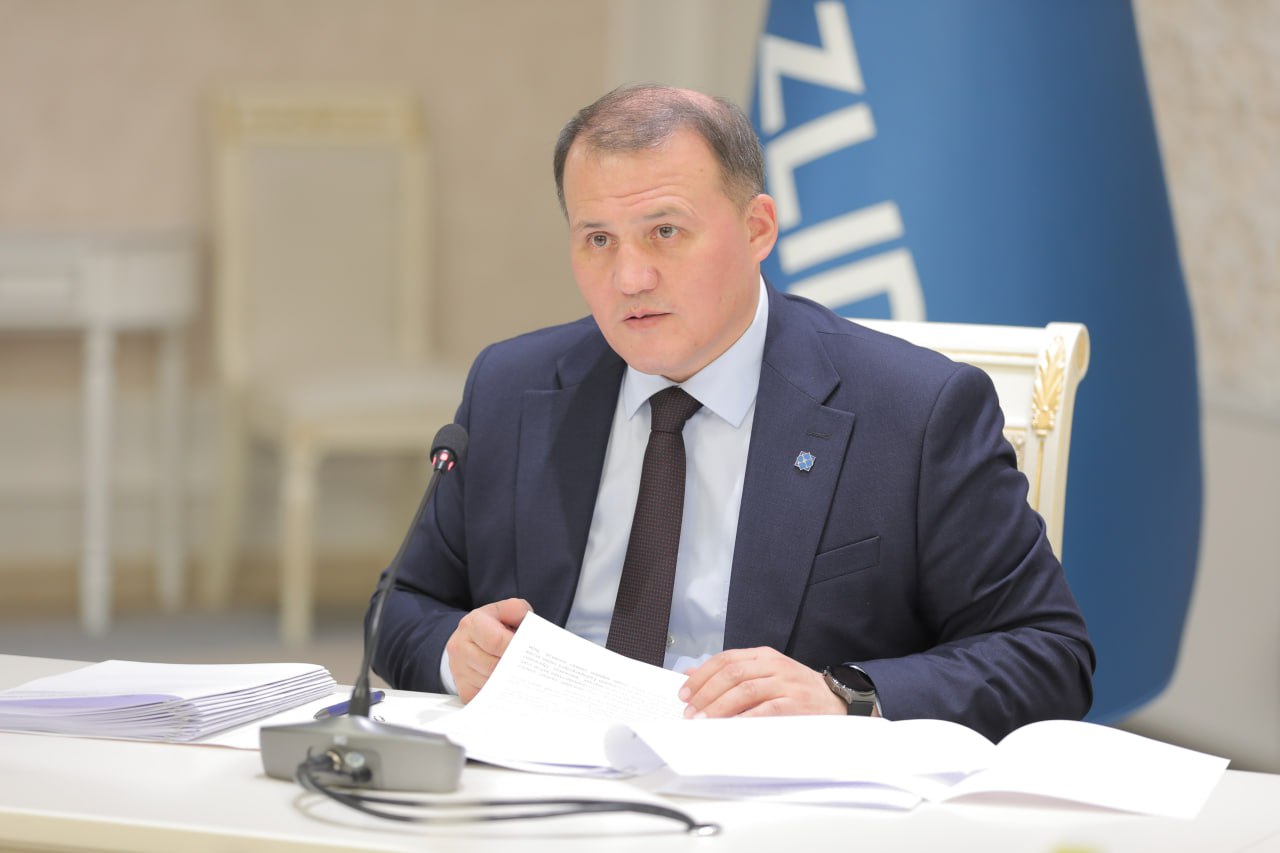
Aktam KHAITOV,
Chairman of the Executive Committee of the Political Council of UzLiDeP